
Today, the quilt is considered quintessentially American. However, evidence reveals that in Egypt, Asia and the Middle East, fabric was designed and quilted for more than 3,000 years. By A.D. 800, trade brought cotton to Europe, where during the 1700s, methods for printing cotton were developed that created a valuable industry. British settlers who came to North America brought with them color-fast, comfortable fabric and quilt techniques such as whole-cloth quilting and sewing pieces of fabric together to make designs.
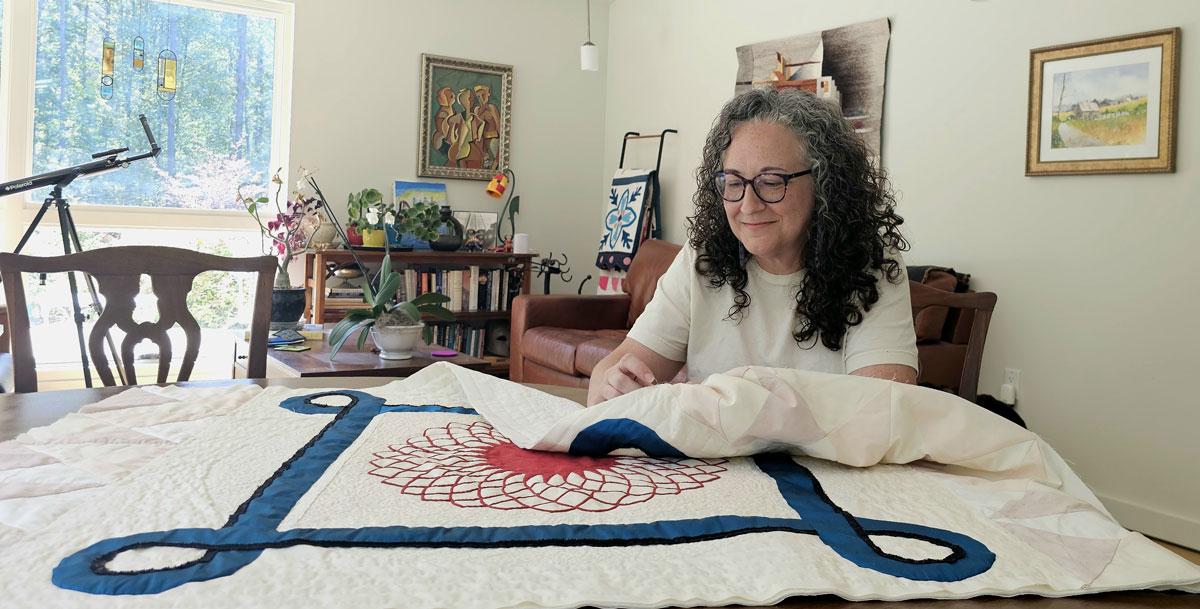
Artist Emma Alcazar works on one of her quilts, which features traditional Chickasaw designs representing the red sun at its center and the four winds in blue on each corner.
Photo courtesy of Emma Alcazar
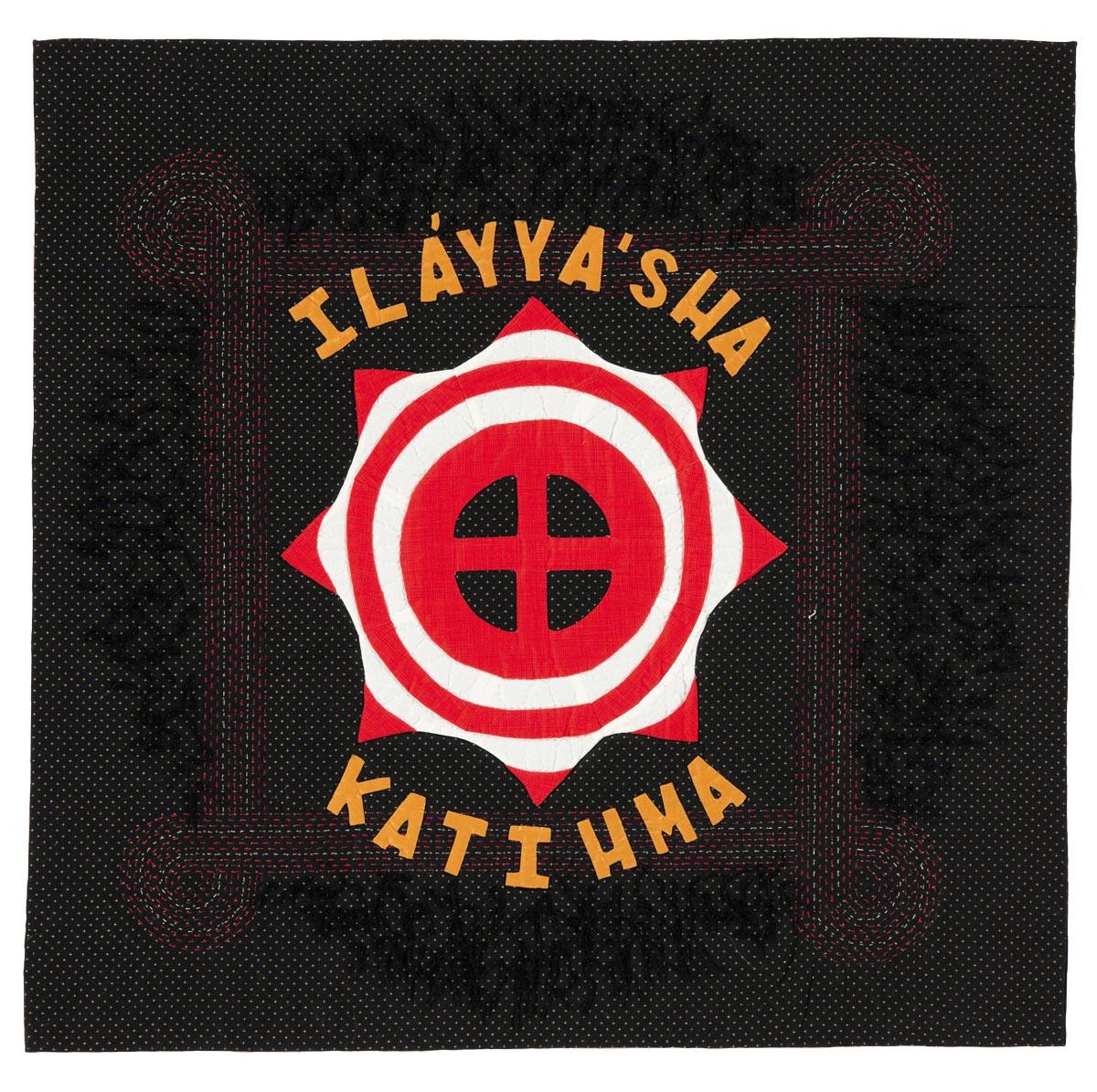
Reflecting the endurance of Indigenous peoples and cultures, this quilt’s central design was inspired by gorgets that are more than 600 years old and were found on Chickasaw ancestral homelands.
“Iláyya’sha Katihma” (“We Are Still Here”), Emma Alcazar (Chickasaw), 2023; cotton fabric, wool batting, appliqué and thread; 35" x 36".
Photo courtesy of the International Quilt Museum, University of Nebraska-Lincoln
During the mid-1850s, missionaries introduced cloth-quilting techniques to Native women as part of the attempt to assimilate them into their ways. However, the Native artisans adapted them to create textiles that reflected their own cultures.
“Quilts offer such a fascinating look at history,” said Carolyn Ducey, who served as a curator of collections for the International Quilt Museum at the University of Nebraska-Lincoln. Quilt designs also became a way for many women to express themselves. She said, “We get to hear their voice when so many of their voices were not being heard.”
In recognition of the 250th anniversary of the United States’ Declaration of Independence, the National Museum of the American Indian is hosting a Quilt Along. Anyone can download patterns representing different eras in U.S. history from the NMAI website (AmericanIndian.si.edu/quilting) and create her or his own quilt. These patterns were designed by five Native artists, including Chickasaw quilt and fiber artist Emma Alcazar.
“Our view of the past 250 years is unique,” said Alcazar. Among her various contemporary designs are diamond shapes inspired by those that appear on quilts of her Chickasaw people in Oklahoma. She also has incorporated appliquéd words from her Native language, Chikashshanompa’. She created her “Iláyya’sha Katihma” (“We are Still Here”) artwork, which is now in the International Quilt Museum’s collection, in response to the common misconception that Indigenous cultures only thrived in the past. Alcazar said, “I wanted to shout into the void that we are modern people and still here.”
See the artists’ quilt block designs and join the Quilt Along by visiting AmericanIndian.si.edu/quilting.